
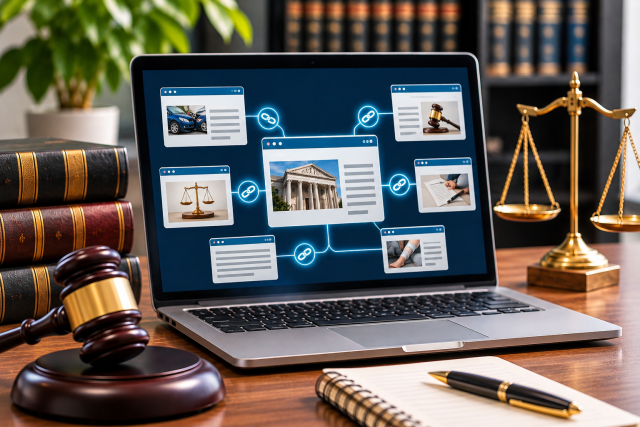
A law firm’s website needs more than informative pages and professional design to attract potential clients. Visitors should be able to find relevant information quickly, while search engines need clear pathways to discover and understand website content. One effective way to support both goals is through internal linking for law firms. By connecting related pages and articles, attorneys can create a more organized website that helps readers explore legal topics and discover available services.
At JNJY, LLC, our team understands that a successful legal marketing strategy involves more than publishing individual blog posts. Every page should contribute to a connected website that provides useful information and encourages meaningful engagement. Thoughtful internal links can strengthen website structure, improve navigation, and help search engines recognize relationships between important legal topics.
Why Internal Linking for Law Firms Matters for Google Rankings
Internal linking for law firms involves connecting one page of a legal website to another page on the same website. These links might direct readers from an educational blog post to a related practice area page, another informative article, or a relevant service description. When used naturally, internal links make it easier for visitors to explore information without repeatedly returning to the homepage.
Search engines also use links to discover pages and understand how website content relates to other information. Google’s SEO guidance encourages clear website organization and descriptive links that help users and search engines understand content. Although internal links do not guarantee improved rankings, a thoughtful linking structure can support crawling, website usability, and content relevance.
How Internal Links Help Search Engines Understand Your Website
One of the primary benefits of internal linking for law firms is helping search engines recognize connections between related legal subjects. A personal injury website might contain separate pages discussing car accidents, truck collisions, insurance claims, and compensation questions. Connecting these resources helps establish relationships between the topics while giving visitors additional information.
Search engines discover many pages by following links from other pages. If important content has few or no internal links pointing toward it, that content may be harder to discover through normal website navigation. Linking relevant articles to important practice area pages creates clearer pathways throughout the website. A well-organized structure can also help search engines understand which pages cover broad subjects and which provide more detailed explanations.
Improving the User Experience With Relevant Links
Effective internal linking for law firms should prioritize the reader’s experience. People searching for legal information may not know which questions to ask or which services apply to their circumstances. Helpful internal links can guide them toward additional explanations without interrupting their reading experience.
For example, someone reading about accident claim deadlines might benefit from a link to an article explaining the personal injury claims process. Another reader researching insurance disputes may appreciate a direct connection to relevant legal services. These links should appear where they naturally support the surrounding information. When visitors can move easily between useful pages, they may spend more time exploring the website and develop a clearer understanding of the firm’s services.
Connecting Blog Posts to Important Practice Area Pages
A strong strategy for internal linking for law firms includes connecting educational articles with relevant practice area pages. Blog posts frequently answer specific questions, while practice area pages explain the legal services a firm provides. Linking these resources creates a natural path from learning about a legal concern to understanding available representation.
Consider a blog article discussing common mistakes after a car accident. A relevant internal link could direct readers to the firm’s car accident practice area page for additional information about legal assistance. Similarly, an article explaining premises liability might connect to a page describing slip-and-fall representation. Professional topical blog writing can support this approach by developing related articles that complement the firm’s main service pages rather than competing with them.
Choosing Descriptive Anchor Text for Internal Links
Anchor text is an important part of internal linking for law firms because it tells readers what they can expect when following a link. Anchor text refers to the clickable words that connect one webpage to another. Clear, descriptive wording helps visitors understand the destination before selecting it.
For example, linking the phrase “car accident claims” to a relevant article provides more context than using vague wording such as “click here.” However, anchor text should fit naturally within the sentence rather than appearing forced or repetitive. Using the same keyword excessively across many links can make content difficult to read. A balanced approach includes descriptive phrases that accurately reflect the destination page and support the surrounding discussion.
Building Topic Clusters Around Legal Practice Areas
Creating topic clusters is another useful application of internal linking for law firms. A topic cluster consists of a central page covering a broad subject and several supporting articles addressing related questions. Internal links connect these resources, allowing readers to explore a subject in greater detail.
For example, a personal injury practice might maintain a central page explaining personal injury representation. Supporting articles could discuss medical documentation, insurance negotiations, accident reporting requirements, and filing deadlines. Linking these articles to the central page and to one another where relevant creates an organized collection of information. This approach can make complex legal subjects easier to navigate while supporting a clear website structure.
Supporting Local Search Visibility Through Internal Links
Location-focused content can also benefit from internal linking for law firms. Attorneys serving multiple communities often maintain pages describing services available in particular cities or counties. Connecting these pages with relevant practice area information can help visitors understand where the firm operates and which legal services are available.
For example, a blog post explaining state-specific accident laws might link to a relevant location page or practice area description. These connections should provide genuine value rather than simply repeating geographic keywords. Effective localized legal marketing combines useful regional information with accurate service descriptions. Internal links can support that strategy by helping visitors move between local resources and broader legal explanations.
Avoiding Common Internal Linking Mistakes
Although internal linking for law firms offers several benefits, poorly planned links can create confusion. One common mistake involves adding too many links to a single paragraph, making the content difficult to follow. Another problem occurs when links direct readers to unrelated pages simply because those pages contain important keywords.
Broken links also create a frustrating experience because visitors cannot reach the information they expect. Law firms should periodically review website links to ensure destinations remain accessible and relevant. Linking only to the homepage is another missed opportunity, since visitors may benefit more from connections to specific service pages or educational articles. A thoughtful strategy focuses on relevance, accuracy, and clear navigation rather than maximizing the number of links.
Updating Older Articles With New Internal Links
Maintaining internal linking for law firms requires occasional reviews as websites grow. When new articles are published, older content may contain opportunities to link to those resources. Likewise, newly created pages should connect to existing information that helps readers understand related legal subjects.
For example, a firm publishing a new article about accident claim documentation might update an older post about insurance negotiations to include a relevant link. This creates additional pathways between useful resources and helps keep the website organized. Regular website content updates can support this process by identifying outdated links, improving navigation, and connecting newly published material with established pages. Internal linking should remain part of ongoing website maintenance rather than a one-time project.
Measuring the Effectiveness of Your Internal Linking Strategy
Evaluating internal linking for law firms involves reviewing how visitors interact with website content and whether important pages are accessible. Website analytics tools can provide information about visitor behavior, navigation patterns, and engagement with particular pages. These insights may reveal opportunities to improve how related information is connected.
Google Search Console can also help firms monitor search performance and identify indexing concerns. However, changes in rankings or traffic cannot always be attributed directly to internal links because many factors influence search visibility. Firms should evaluate internal linking alongside content quality, technical website performance, and overall marketing goals. Regular reviews can help maintain a useful website structure as new pages and articles are added.
Creating a Long-Term Internal Linking Strategy
A sustainable approach to internal linking for law firms begins with organizing website content around important practice areas and client questions. Rather than adding links randomly, firms should consider how each page contributes to the overall visitor experience. Important service pages should be easy to reach, while educational articles should connect to other resources when those connections provide additional value.
As a website expands, maintaining this structure becomes increasingly important. New content should be reviewed for relevant linking opportunities, and older pages should be checked periodically for broken or outdated destinations. A consistent strategy can help create a website that is easier to navigate, more informative, and better organized for both visitors and search engines.
Contact Our Team Today
Investing in internal linking for law firms can help create a stronger website structure, connect valuable legal information, and support long-term digital marketing goals. At JNJY, LLC, our team provides top-quality legal content marketing services designed to help law firms improve website organization, strengthen online visibility, and communicate effectively with prospective clients.
From content planning and professional blog writing to website content development and ongoing updates, we help law firms build informative websites that reflect their services and marketing priorities. Our approach emphasizes useful information, natural connections between related pages, and content that supports a positive visitor experience.
Ready to improve your law firm’s website content and internal linking strategy? Contact our team today to learn how our professional legal content marketing services can support your firm’s continued growth.